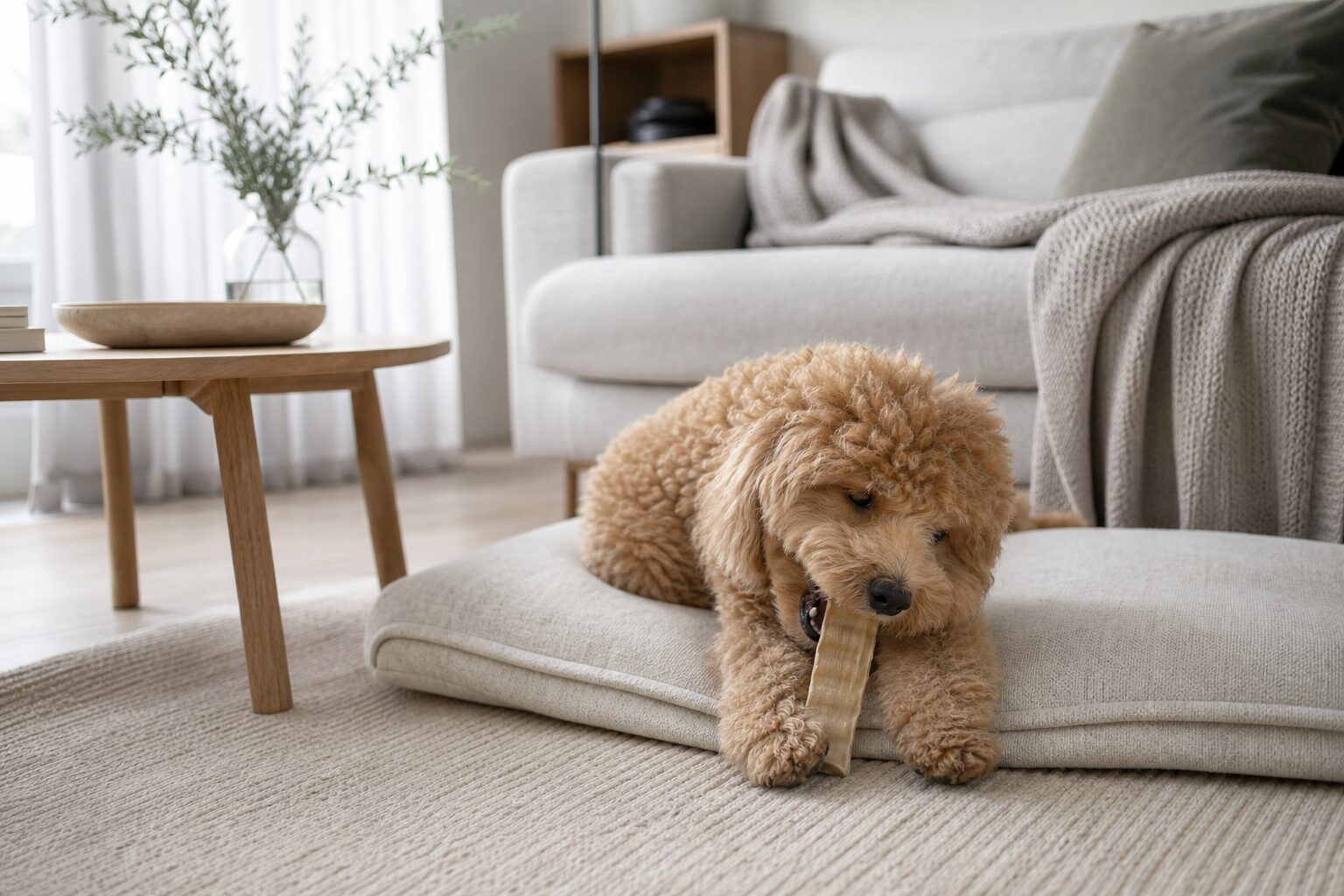
Our dog Max is twelve now, and about a year ago he started doing this thing where he’d get up from his bed slowly, almost carefully, like his back legs needed a second to agree with the rest of him. Our vet mentioned joint support and, half-jokingly, said “some dogs love the chewy stuff more than the tablets.” That’s how we ended up trying shark cartilage dog treats, and honestly, I wasn’t expecting him to bother finishing his dinner just to get to dessert.
If you’ve never come across them, shark cartilage dog treats are exactly what they sound like — dried, chewy strips made from cartilage rather than muscle meat. They’re naturally high in chondroitin and glucosamine, the same compounds you’ll find in a lot of joint supplements, except here they’re delivered as something your dog actually wants to eat rather than a pill wrapped in cheese.
Why shark cartilage dog treats work for older or active dogs
Cartilage is mostly connective tissue, and connective tissue is where chondroitin sulfate naturally occurs. When dogs chew something with a firm, slightly rubbery texture like this, two things happen at once: the chewing action itself works the jaw and helps clean plaque off the back teeth, and the cartilage they’re breaking down is feeding their joints the raw materials they’d otherwise get from a supplement bottle.
We use the shark cartilage dog treats a few times a week, broken into smaller pieces for Max since he’s not as enthusiastic a chewer as he used to be. Younger, more food-driven dogs will happily work through a full piece over ten or fifteen minutes, which is genuinely useful if you need twenty minutes of quiet while you’re on a work call.
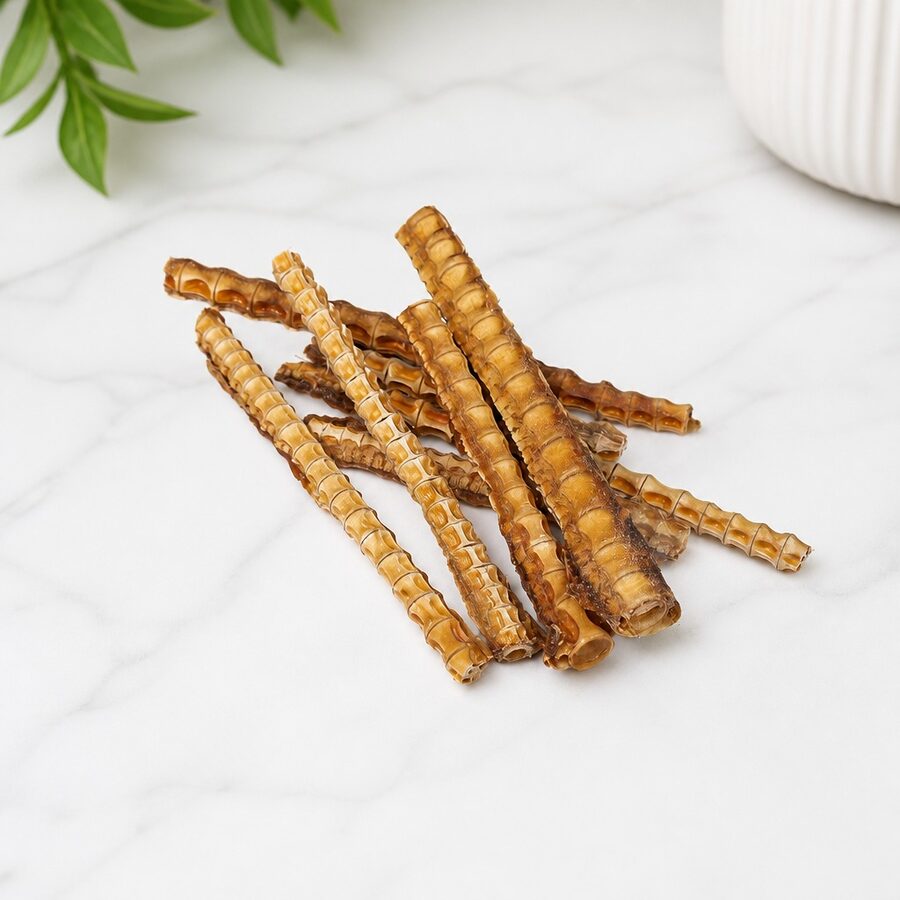
What’s actually in the bag
- Single-ingredient cartilage, no added sugar, salt or preservatives
- Naturally occurring glucosamine and chondroitin
- Low fat compared to most meat-based jerky treats
- Firm but not rock-hard — safer for dogs with worn or sensitive teeth than antlers or raw bones
That low-fat point matters more than people expect. A lot of “healthy” dog treats are still fairly rich, which is fine occasionally but adds up if you’re giving something daily. Cartilage treats sit lower on the calorie scale, so they’re easier to justify as a regular thing rather than a rare indulgence.
How much to give and how often
For a medium to large dog, one to two pieces a day is plenty, and for smaller breeds, half a piece broken up works well. We treat it a bit like a nightly ritual now — Max gets his after his evening walk, which also happens to be when he’s most likely to flop straight into his bed afterwards instead of pestering us for scraps at the dinner table.
If your dog is new to chewy treats, watch the first few sessions. Some dogs try to swallow pieces whole rather than working through them properly, which isn’t ideal with any dense treat. Breaking a piece into two or three smaller sections for the first go is a simple fix.
Mixing it up: what else is in the rotation
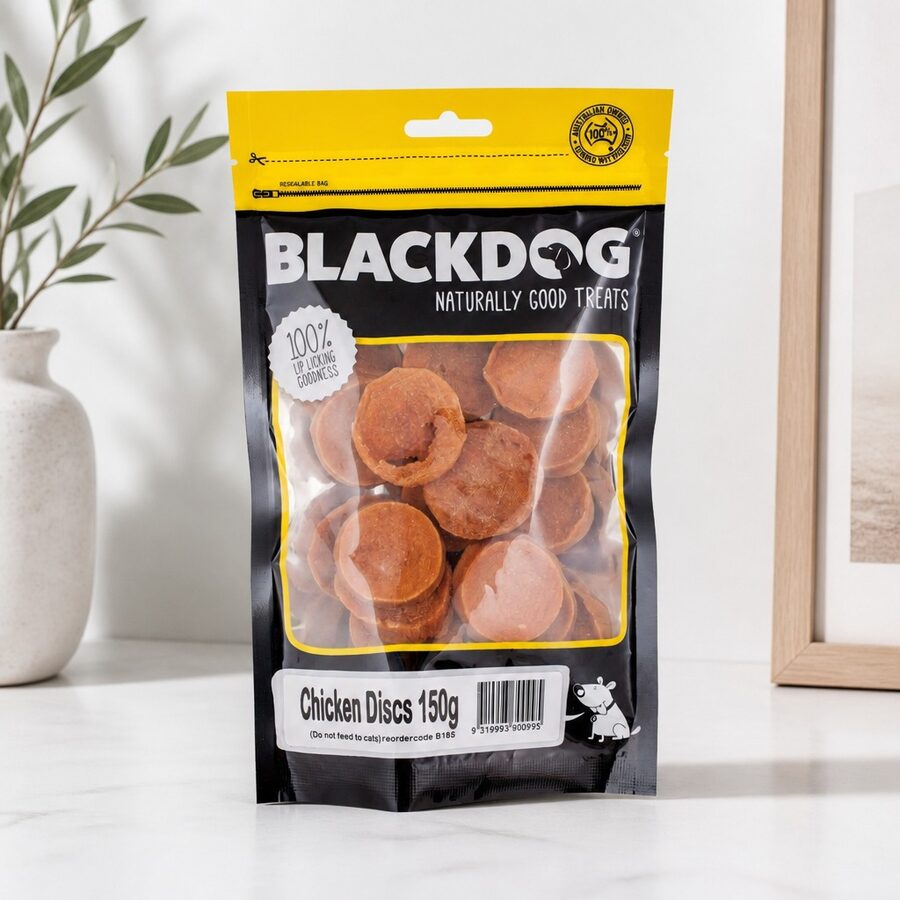
We don’t give the same treat every single day — partly for variety, partly because Max gets a bit smug and expectant if the routine never changes. The chicken discs are our go-to for training sessions since they’re easy to break into pea-sized rewards without falling apart in your pocket. High protein, low mess, and Max will do an embarrassing number of “sits” for one.
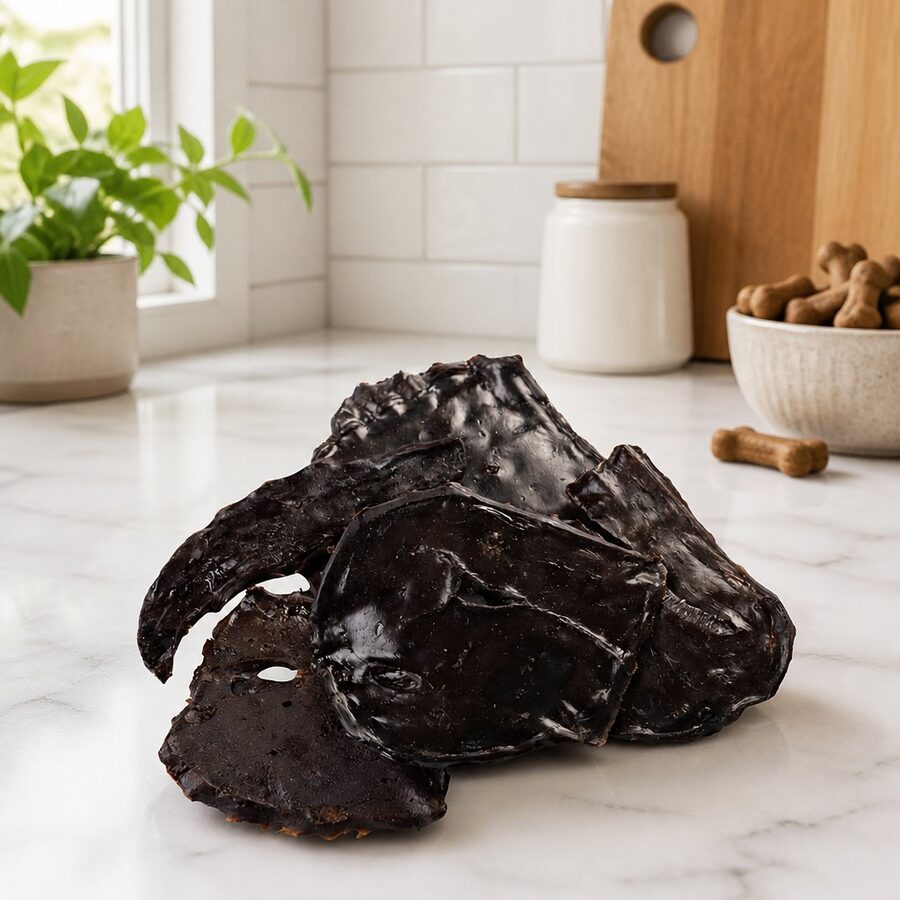
On the days we want something a bit richer — after a long walk on the weekend, or just because he’s earned it — we’ll go for the beef liver treats. They’re Australian made, single ingredient, and have that strong smell dogs seem to find irresistible, which makes them handy for recall training in the park when chicken discs alone aren’t cutting through the distraction of other dogs.
The way we think about it: shark cartilage for joint and dental support a few times a week, chicken discs for daily training rewards, beef liver for the occasional big win or a treat-and-distract moment (vet visits, nail trims, that sort of thing). Rotating protein sources also means we’re not relying on one single ingredient for months on end, which some vets suggest is gentler on digestion long term.
Storing them properly
Cartilage treats are dried, not fresh, so they keep well, but heat and humidity aren’t their friend. We keep the bag sealed in an airtight container in the pantry rather than leaving it open on the bench — Melbourne summers get humid enough that treats left out can go slightly soft and lose that satisfying snap. If you’re in a warmer part of the country, the fridge is a safe bet for anything you’re not using within a few weeks.
Signs your dog is enjoying the chew, not just eating on autopilot
- They take the treat somewhere quiet — their bed, under a table — rather than eating it standing up
- Chewing is slow and deliberate, often with pauses
- They guard it a little, which is normal and just means they actually value it
Max still does this weird thing where he carries his cartilage treat to the same spot on the rug every time, like it’s part of the ceremony. I’ve stopped questioning it. If a $1kg bag of something can get a twelve-year-old dog moving a bit more happily to his dinner bowl and settling in for a proper chew afterwards, that’s a fairly easy win in our house.