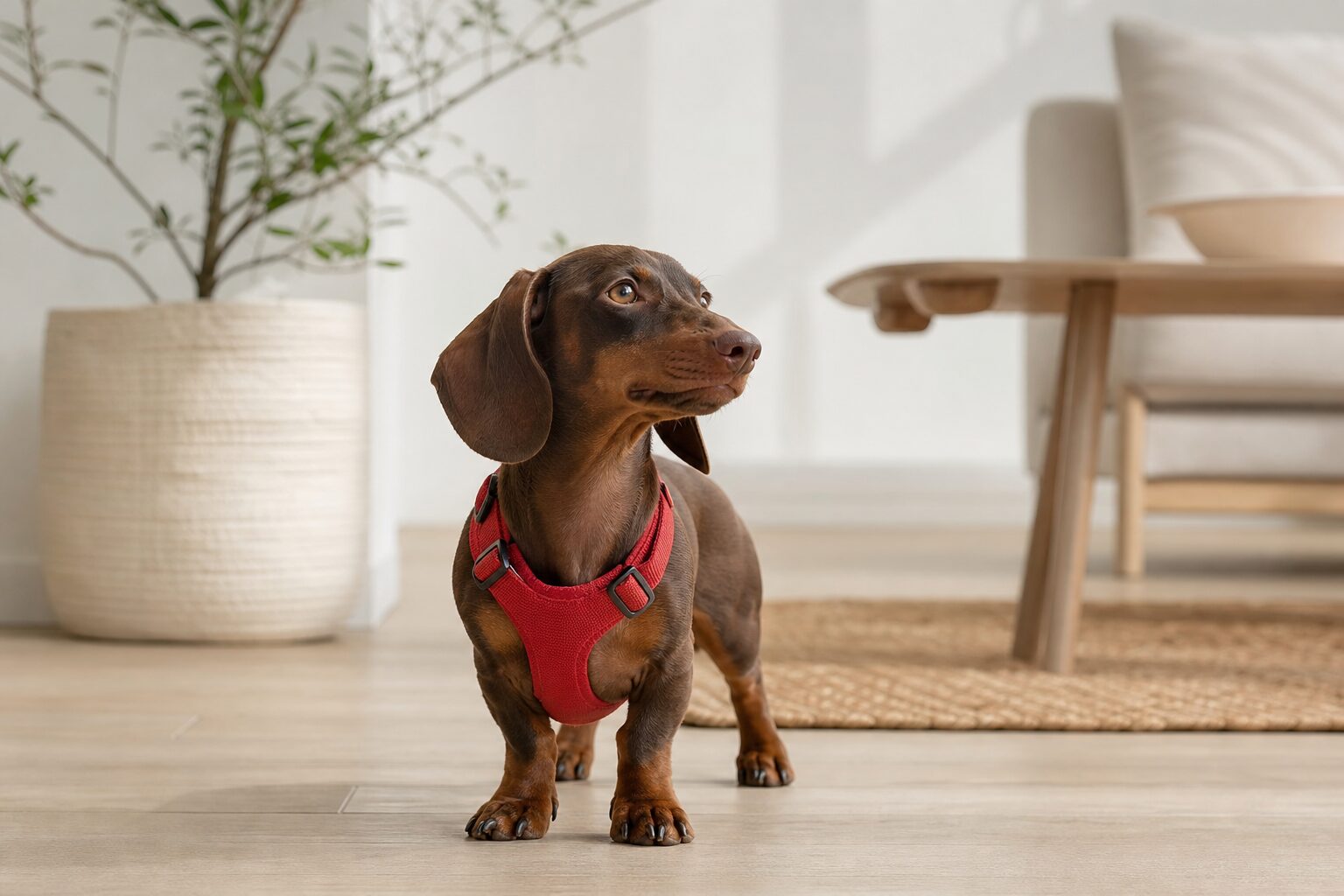
I had a customer message us last month asking if the Red Small Adjustable Dog Harness would fit her 4.2kg Cavoodle. Fair question. Nowhere on most product pages do brands actually explain what “small” means in centimetres, or why the chest strap matters more than the neck strap. So I sat down and worked through our own spec sheet properly, the way I wish someone had explained it to me before I bought three wrong-sized harnesses for my own dog.
If you’ve ever ordered a harness online and had it arrive either swimming on your dog or pinching under the front legs, this one’s for you.
What “small adjustable” actually means in measurements
Sizing on a harness isn’t about your dog’s weight alone — it’s about girth. That’s the measurement around the widest part of the ribcage, just behind the front legs. Weight is a rough guide at best; a stocky 6kg Jack Russell and a lean 6kg Whippet need completely different harness shapes.
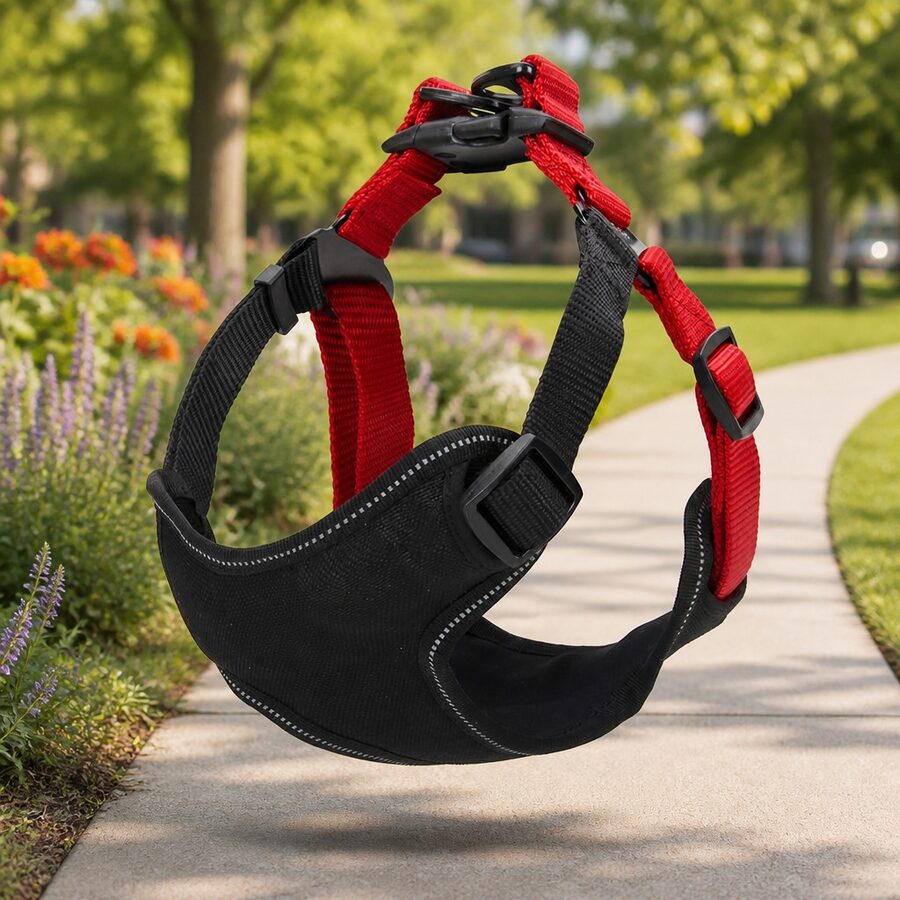
For the Red Small Adjustable Dog Harness, the small size is built for dogs roughly 3-8kg, with a chest girth range that typically spans 35-48cm once the straps are extended fully. That range exists because “adjustable” isn’t a marketing word here — there are usually two or three points of adjustment (neck, chest, sometimes the girth strap too), so you’re not locked into one exact number.
How to actually measure your dog before ordering
Skip the bathroom scales. Grab a soft tape measure instead.
- Measure around the ribcage, about two fingers behind the front legs, at a normal standing position (not sucked in, not full after dinner).
- Measure around the base of the neck, where a collar would normally sit.
- Add 2-3cm to both numbers for comfortable adjustment room — you want two fingers to slide flat under the strap, not one, not four.
If your dog measures right at the edge of a size range, go up. Loose and readjustable beats tight and returned.
Why multiple attachment points matter more than colour
This is the part people skim past. A harness with just a back clip is fine for a dog that already walks nicely on lead. But if your dog pulls, a front-chest attachment point changes the whole dynamic — it turns gently sideways instead of letting them lean into the pull with full chest strength.
The red harness has front and back attachment points built in, which is genuinely useful if you’re working on loose-lead walking or you’ve got a puller who’s still learning. Clip the lead to the front ring for training walks, back ring for the relaxed weekend stroll once they’ve settled into the habit.
Material and straps: what to check before you buy
Specifications worth actually reading (not just weight range):
- Strap width — narrower straps (under 2cm) can dig into fine, short-haired coats. Small dogs generally do better with a slightly padded, wider strap even in the small size range.
- Buckle type — quick-release plastic clips are lighter and fine for most small dogs; metal clips add weight but suit dogs that chew or fuss with buckles.
- Adjustment points — more points mean a better custom fit, especially for narrow-chested breeds like Whippets or deep-chested ones like French Bulldogs.
- Washability — most fabric harnesses are hand-wash or gentle machine wash, air dry only. Skip the dryer; it warps the webbing.
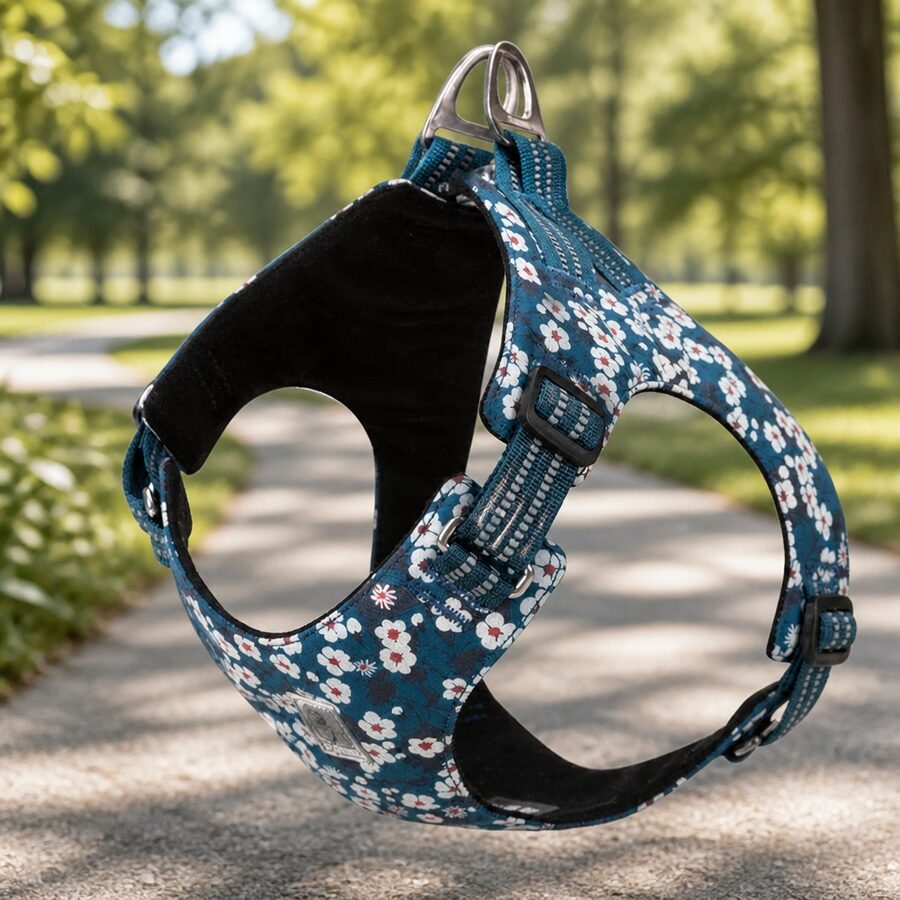
If you like the same fit and function but want something a bit softer in the pattern department, the Floral Dog Harness in Blue uses a lightweight cotton build with the same adjustable-strap logic, plus reflective stitching for evening walks. Good option if you want function without it looking overtly “sporty.”
Getting the fit right on day one
Even with correct measurements, the first fitting matters. Here’s what to check once it’s on:
- Two fingers should slide flat under every strap — neck, chest, and girth.
- The chest plate shouldn’t sit right against the throat; it should rest a couple of centimetres below, over the sternum.
- Watch your dog walk a few steps. If the harness twists sideways or slides toward one shoulder, a strap needs tightening.
- Check behind the front legs for rubbing after a 10-minute walk, especially with new dogs who aren’t used to fabric there yet.
Small dogs lose or gain a bit of coat volume seasonally too — worth rechecking the fit every few months, particularly after a big grooming session.
Harness or collar — when specs point you to one over the other
This gets asked a lot, so worth a straight answer. Harnesses distribute pressure across the chest and shoulders, which matters for small breeds prone to tracheal sensitivity — pugs, pomeranians, chihuahuas, that sort of build. A collar puts all the pressure on the neck, which isn’t ideal for a dog that pulls or has a delicate windpipe.
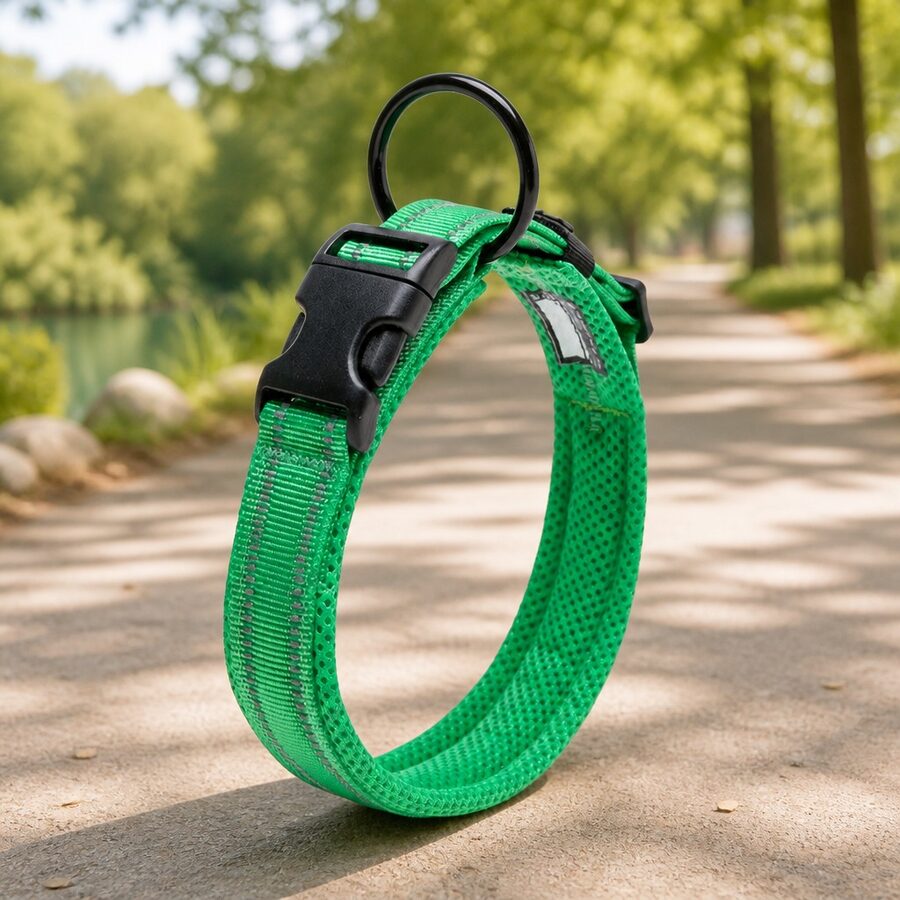
That doesn’t mean collars are pointless. A collar is still where the ID tag lives, and for calmer walkers or for general everyday wear (not lead walking), a well-made collar works fine. If you want something solid for that role, the Heavy Duty Reflective Dog Collar with Secure Clip in M size has a safety lock clip that won’t pop open mid-walk, plus reflective thread for early morning or after-dark walks.
Most owners end up using both — collar for ID and everyday wear, harness for actual lead walking and training. It’s not overkill, it’s just splitting the job between two pieces of gear built for different purposes.
A quick pre-order checklist
Before you click buy on any small adjustable harness, run through this:
- Have you measured chest girth in centimetres, not just guessed from weight?
- Does the harness offer front and back attachment points, or just one?
- Is the strap width appropriate for a short-haired or fine-coated dog?
- Can you hand wash it without the padding losing shape?
Get those four things right and you’ll skip the returns process entirely. A harness that fits properly on day one is one your dog forgets they’re wearing by day three — which, honestly, is the whole point.